
10 best social media listening tools for 2026
Key Takeaways
- Social media listening tools help brands understand conversations, sentiment, trends, and audience interests across social platforms.
- The best tools identify emerging topics, influencers, customer concerns, brand perception, and early reputation risks.
- Some solutions focus on collecting and organizing data, while others help teams turn social insights into action.
- ICUC combines leading social listening technology with expert analysis, consumer insights, and strategic recommendations, so your team can move from raw conversation data to clearer decisions.

Your audience is already telling you what they care about. The hard part is finding the insights that matter before they disappear, or worse, turn into brand-harming crises.
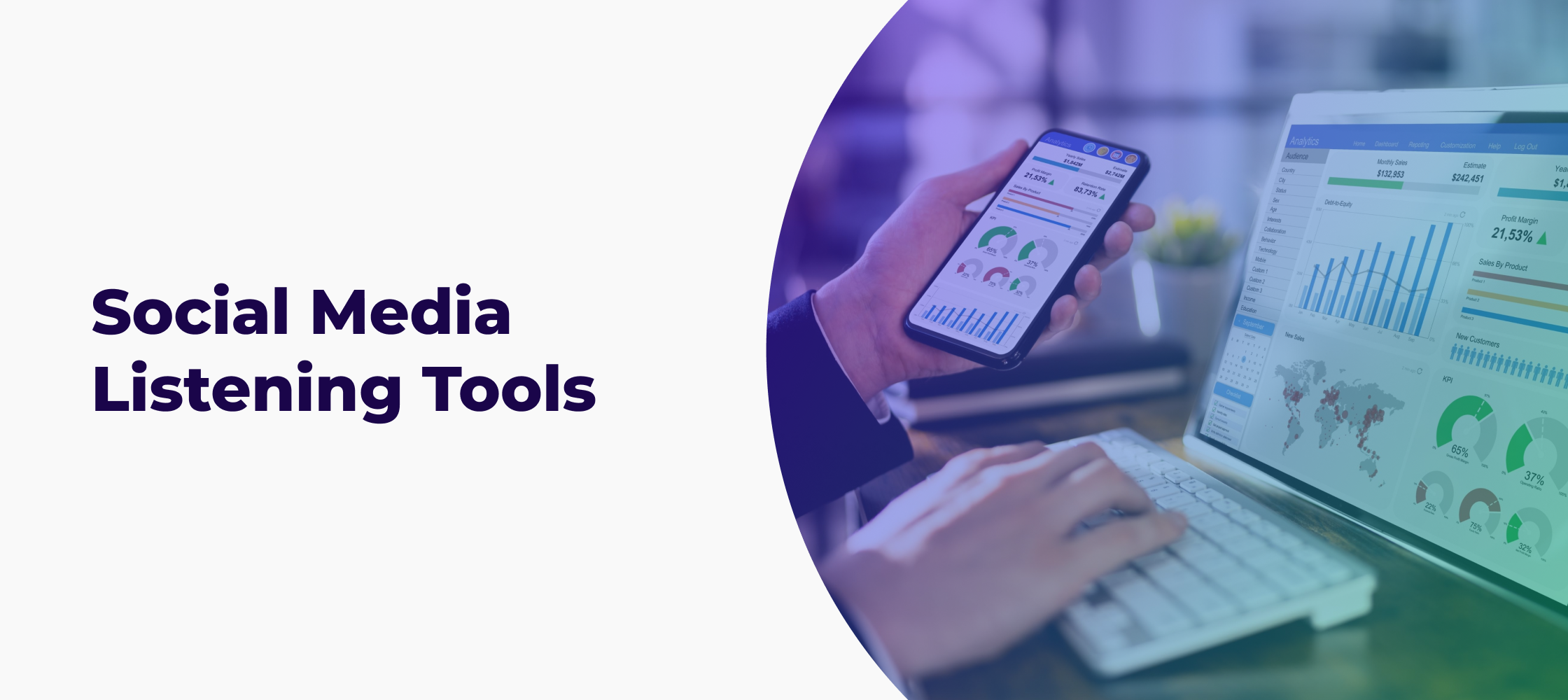
Social media listening tools help you understand what your audience says, feels, asks, shares, and expects across social channels. Used well, they can reveal brand sentiment, customer pain points, emerging trends, campaign reactions, influencer opportunities, and early signs of reputational risk.
But tools alone do not create intelligence. A dashboard can collect mentions, flag spikes, and organize sentiment, but human judgment is what separates noise from meaningful action. The right partner helps your team understand what a signal means, when it needs escalation, and how it should shape marketing, customer experience, reputation, or moderation decisions.
This article compares the best social media listening tools for 2026, explains what to look for, and shows how the right human-led support can turn listening data into insights your team can use.
Compare the best social media listening tools
Before you compare features, decide what kind of listening program you need. A brand tracking conversations across regions, languages, product lines, and risk categories will need a different setup than a small team monitoring campaign hashtags.
Solution | Best for | Key strength |
ICUC Social Listening | Human-led social listening and consumer intelligence | Expert analysis that turns platform data into strategic recommendations |
Brandwatch | Enterprise listening and consumer intelligence | Advanced data coverage for audience, sentiment, and market analysis |
Talkwalker | Visual listening and image recognition | Image, video, and logo detection across visual social content |
Meltwater | PR, media monitoring, and social intelligence | Integrated media and social tracking for communications teams |
Sprinklr | Enterprise customer experience intelligence | Unified social, care, and customer signals across global teams |
Sprout Social | Mid-market social listening and management | Accessible listening workflows connected to publishing and engagement |
Hootsuite | Social listening, publishing, and reporting workflows | Centralized social management with monitoring built into daily workflows |
YouScan | Visual consumer insights and brand perception | AI-powered image analysis for product, logo, and lifestyle context |
Mention | Brand monitoring and online mention tracking | Simple alerts and dashboards for tracking brand conversations online |
Keyhole | Campaign, hashtag, and influencer tracking | Real-time hashtag analytics for campaigns, events, and creator programs |
What are social media listening tools?
Social media listening tools collect and analyze online conversations about your brand, competitors, industry, products, campaigns, and audience interests. They help you understand the themes behind social conversation, not only the number of mentions.
A social listening program typically looks at:
Brand mentions: What people say about your brand, products, locations, leaders, or campaigns.
Audience sentiment: Whether conversation is positive, negative, neutral, frustrated, excited, confused, or shifting.
Trend signals: Topics, formats, questions, and behaviors gaining momentum.
Customer pain points: Repeated concerns, support issues, product feedback, and service gaps.
Competitive perception: How people compare your brand against alternatives.
Risk indicators: Complaints, misinformation, sensitive claims, harmful content, or crisis issues.
What this means for brands: A social media monitoring tool is usually more focused on tracking mentions and alerts. Social listening tools go deeper by helping teams understand patterns, context, sentiment, and audience motivation. Monitoring tells you that a conversation happened. Listening helps you understand what the conversation means.
What can social listening data actually tell you?
Social listening data can help you answer a simple but critical question: What is your audience trying to tell you? That answer can shape brand strategy, product messaging, customer care, campaign planning, executive reporting, and reputation management.
For enterprise teams, B2B social listening can connect public conversations to marketing, sales, customer experience, and leadership reporting.
Social listening data can show you:
Audience priorities: Track recurring questions, needs, complaints, values, and moments of excitement.
Conversation channels: See whether discussions are happening on TikTok, Instagram, Reddit, YouTube, LinkedIn, review sites, forums, or news comments.
Sentiment and reputation shifts: Watch for changes in tone, negative spikes, misinformation, safety concerns, or sensitive language.
Campaign and influencer insights: Compare engagement, sentiment, audience language, and the voices driving discussion.
Competitive perception: Understand where competitors are gaining trust, losing favor, or creating openings for your brand.
What this means for brands: The value comes from connecting signals across teams. When you use social media insights well, repeated complaints, product questions, sentiment shifts, and risk signals can reach the teams best equipped to act.
1. ICUC Social Listening: Best for managed social listening
ICUC works alongside leading listening platforms to help your team understand which social signals need attention and how insights should inform marketing, customer experience, communications, moderation, and reputation decisions.
Rather than replacing platforms like Brandwatch, Sprinklr, Hootsuite, or Sprout Social, ICUC helps you get more value from them through dedicated analysts, query strategy, consumer insights, escalation workflows, and social intelligence marketing leaders can use.
Best for: Organizations that use, or plan to use, social media listening tools but need expert support turning platform data into business intelligence.
Key strengths:
Works with your current listening stack: ICUC supports your existing platforms or helps configure the right setup.
Dedicated analysts: Human experts review conversation patterns, sentiment, context, and risk.
Always-on monitoring: ICUC monitors signals across time zones and high-volume moments.
Audience intelligence: Reporting shows what people care about and where perception is shifting.
Crisis escalation: Risk signals can be prioritized, documented, and routed quickly.
Strategic recommendations: ICUC turns listening findings into next steps for social, brand, CX, communications, and leadership teams.
Things to consider: ICUC is not a standalone software-only platform. It is a social listening partner for brands that need expert judgment, governance, and ongoing strategic support.
2. Brandwatch: Best for enterprise consumer intelligence
Brandwatch is a social listening and consumer intelligence platform built for large organizations that need deep data access, advanced querying, sentiment analysis, audience insights, and reporting. Its listening software includes historical data, multilingual analysis, and access to insights from more than 100 million online sources.
Best for: Enterprise social listening, consumer intelligence, brand health tracking, competitive analysis, and crisis monitoring.
Key strengths:
Broad data coverage: Useful for teams tracking large volumes of online conversation.
Advanced queries: Strong fit for teams with experienced analysts who can build detailed listening topics.
Consumer intelligence: Helps connect conversation data to audience behavior and perception.
Enterprise reporting: Supports teams that need dashboards and stakeholder-ready insights.
Things to consider: Brandwatch is a leading enterprise social listening platform, but teams still need clear query strategy and analyst expertise to get full value from the data. ICUC partners with Brandwatch to translate platform findings into strategic insights, consumer intelligence, and actionable recommendations.
3. Talkwalker: Best for visual listening and image recognition
Talkwalker is a social listening and media intelligence platform with strong visual listening capabilities. Its image recognition features help brands detect logo and visual mentions across images, videos, and other media, including cases where the brand is not named in text.
Best for: Visual listening, brand logo tracking, sponsorship measurement, earned media analysis, and reputation monitoring.
Key strengths:
Image and video recognition: Helps capture brand mentions that text-only searches may miss.
Visual brand safety: Flags unauthorized logo use, sensitive brand appearances, and visual content that may need review.
Trend tracking: Helps identify emerging visual themes and content formats.
Media intelligence: Strong fit for teams connecting social, earned media, and campaign analysis.
Things to consider: Visual listening is strongest when your audience frequently shares images, videos, events, products, packaging, sponsorships, or creator content. Human review is still needed to understand context, audience intent, and whether a visual mention needs action.
4. Meltwater: Best for PR and social intelligence
Meltwater combines social listening, media monitoring, PR intelligence, and reporting. Its social listening tool is built to monitor conversations across social media, forums, news, and digital channels, with real-time alerts, competitive intelligence, and trend analysis.
Best for: PR teams, communications leaders, media monitoring, competitive intelligence, and reputation reporting.
Key strengths:
Media and social visibility: Helps teams connect press coverage with public conversation.
Real-time alerts: Useful for reputation monitoring and issue detection.
Competitive tracking: Benchmarks share of voice and audience perception.
Reporting workflows: Strong fit for communications teams that need regular stakeholder updates.
Things to consider: Meltwater is often strongest for PR and communications workflows. If you need customer care integration, moderation, or always-on social escalation, plan for additional workflows or partner support.
5. Sprinklr: Best for enterprise customer experience intelligence
Sprinklr is an enterprise customer experience platform that brings social listening, publishing, engagement, customer service, governance, and reporting into one environment. Its social listening product is designed to analyze large volumes of unstructured conversation data and support customer experience decisions.
Best for: Global enterprises, customer experience teams, social care operations, governance, and unified social intelligence.
Key strengths:
Unified customer signals: Helps connect social listening with engagement, service, and care workflows.
Enterprise governance: Useful for teams managing multiple markets, brands, permissions, and approval paths.
Social care connection: Strong fit when listening needs to inform customer response and escalation.
Enterprise scale: Designed for large, complex teams with high engagement volume.
Things to consider: Sprinklr is strongest when teams have clear setup, governance, and reporting processes in place. ICUC works alongside Sprinklr to help brands make sense of customer conversations, prioritize insights, and translate platform data into decisions for marketing, customer care, communications, and leadership teams.
6. Sprout Social: Best for mid-market social listening
Sprout Social combines social media management and listening features in one accessible platform. Teams can use it to follow brand health, review campaign response, analyze sentiment, and bring listening, publishing, engagement, and reporting into the same workflow.
Best for: Mid-market social teams, social media managers, content teams, brand health monitoring, and campaign analysis.
Key strengths:
Ease of use: Gives teams an accessible way to manage listening within daily social workflows.
Listening topics: Supports tracking for brand, industry, campaign, and competitive conversations.
Sentiment and trend analysis: Useful for content planning, campaign reporting, and audience understanding.
Connected social workflows: Keeps listening, publishing, engagement, and reporting close together.
Things to consider: Sprout Social works well for teams that want an accessible social management platform with listening built in. ICUC complements Sprout Social with dedicated analysts, strategic analysis, and business recommendations based on listening data, especially when teams need to connect insights to campaigns, customer experience, brand reputation, or executive reporting.
7. Hootsuite: Best for social listening and publishing workflows
Hootsuite brings social media management and social intelligence into one platform, with listening capabilities that help teams track mentions, competitors, keywords, and sentiment across channels.
Best for: Social teams that want listening, publishing, engagement, and reporting in one workflow.
Key strengths:
Accessible dashboard: Helpful for teams that need a central place to manage daily social activity.
Publishing connection: Listening insights can inform content planning and campaign adjustments.
Real-time monitoring: Tracks brand mentions and audience conversations in real time.
Social intelligence: Useful for social managers who need insights without a highly technical setup.
Things to consider: Hootsuite works well for integrated social workflows, especially when teams want listening and publishing in the same system. ICUC helps brands transform Hootsuite listening data into consumer insights, trend analysis, risk signals, and strategic recommendations, so social teams can move from monitoring conversations to guiding action.
8. YouScan: Best for visual consumer insights
YouScan is an AI-powered social listening platform with a strong focus on visual insights. It helps teams analyze consumer opinions, uncover text and visual insights, identify images featuring brand logos, and monitor brand reputation.
Best for: Visual consumer insights, logo detection, product discovery, image-based brand tracking, and reputation monitoring.
Key strengths:
Visual insights: Helps brands understand how products, logos, and customer experiences appear in everyday social content.
Consumer intelligence: Useful for identifying usage moments, product context, and audience behavior.
Threat detection: Can support brand safety and reputation monitoring.
Trend discovery: Helps teams spot emerging visual patterns and cultural signals.
Things to consider: Visual insights are powerful, but they need human context to become useful. A product photo, meme, or logo appearance may mean different things depending on the caption, community, sentiment, and whether the mention is casual, critical, or high-risk.
9. Mention: Best for brand monitoring
Mention is a social listening and media monitoring tool for tracking audience conversations, monitoring online mentions, publishing content, and responding across social channels.
Best for: Brand monitoring, alerts, online mention tracking, and reporting for smaller social teams.
Key strengths:
Simple monitoring: Helps teams track mentions without a heavy enterprise setup.
Alerts and dashboards: Useful for staying aware of brand, competitor, or industry conversation.
Publishing and response: Supports teams that want monitoring connected to action.
Flexible reporting: Helps share findings with marketing or communications stakeholders.
Things to consider: Mention may be a better fit for simpler monitoring needs than complex enterprise listening programs. If you need multilingual coverage, regulated workflows, or crisis escalation, you may need a more advanced setup or partner support.
10. Keyhole: Best for campaign and hashtag tracking
Keyhole supports social listening, hashtag tracking, profile monitoring, historical insights, and campaign reporting.
Best for: Campaign tracking, hashtag monitoring, event analysis, influencer discovery, and social reporting.
Key strengths:
Hashtag analytics: Helpful for campaign, event, and creator program tracking.
Real-time dashboards: Useful during launches, live events, or rapid campaign moments.
Influencer insights: Can help identify accounts contributing to conversation.
Sentiment and trend tracking: Supports campaign performance analysis and brand monitoring.
Things to consider: Keyhole is especially useful for specific campaign and hashtag use cases. Teams that need broader enterprise listening, customer care integration, or cross-functional governance may need additional tools, workflows, or partner support.
How to choose the best social media listening tool
The best social media listening tool depends on your audience, channels, risk profile, team structure, and decision-making needs. The right platform is easier to choose when you already know what your listening program needs to accomplish.
If your team is still defining goals, workflows, and reporting expectations, start with clear social listening best practices before comparing feature lists.
For enterprise listening programs: Choose a platform built for high volume, multiple markets, complex queries, multilingual coverage, and executive reporting.
For trend and audience analysis: Look for tools that identify themes, sentiment shifts, cultural moments, customer language, and audience segments.
For influencer discovery: Prioritize tools that show who is driving conversation, how audiences respond, and whether the content aligns with your brand.
For reputation monitoring: Look for real-time alerts, sentiment tracking, escalation workflows, and coverage across social, news, forums, reviews, and visual content. Connect listening workflows to a clear social media crisis management plan.
For managed social listening programs: Consider a partner that can build listening topics, monitor conversations, surface risk, identify patterns, and translate data into action.
What this means for brands: The right tool should make your team faster, not busier. If your dashboards raise more questions than they answer, you may need better queries, clearer governance, or expert analysis layered on top of the platform.
In-house vs. agency social listening
Choosing between in-house social listening and agency support comes down to capacity, expertise, and speed. Your team may own the strategy, but you still need people who can analyze conversations, escalate risk, and create useful reporting on a consistent schedule.
In-house social listening teams
In-house teams know your brand, campaigns, products, legal requirements, and leadership priorities. That context is valuable when insights need to move quickly across departments. The challenge is coverage. Social conversation does not follow business hours, and global audiences, high engagement volume, or regulated workflows can stretch internal teams quickly.
In-house teams often need platform training, query-building expertise, sentiment analysis, escalation workflows, reporting standards, and support during launches or high-volume moments.
Agency support
Agency support can help when your internal team lacks the time, staff, or specialized listening experience to manage the full program alone. This is especially useful when you already have technology but need more value from it. A strong partner can provide dedicated analysts, always-on monitoring, multilingual coverage, crisis escalation, campaign analysis, executive-ready recommendations, and brand safety workflows.
Hybrid approaches
Many enterprise teams use a hybrid model. Your internal team owns the brand strategy, business priorities, and stakeholder relationships. A partner supports the listening operation, analysis, reporting, escalation, and optimization. This model works well when you need control and scalability. Your team keeps strategic ownership, while your partner helps you maintain coverage, consistency, and speed.
What this means for brands: Whether you build in-house, work with an agency, or combine both, the priority is having a clear process for turning conversation data into timely insights, escalation decisions, and business recommendations.
Why brands choose ICUC for social listening
Social media listening tools are most valuable when they give your team a clearer path from conversation data to action. Working alongside leading listening platforms, including Brandwatch, Sprinklr, Hootsuite, and Sprout Social, ICUC adds the human expertise needed to make sense of customer conversations, uncover audience insights, identify trends, monitor risk, and connect social signals to business outcomes.
With ICUC, listening becomes:
Audience and campaign intelligence: Understand what your audience needs, which messages resonate, where trends are forming, and who is shaping perception.
Reputation and risk visibility: Surface sentiment shifts, brand safety concerns, misinformation, high-risk conversations, and crisis signals before they spread.
Operational alignment: Connect social insights to the teams responsible for customer care, communications, moderation, compliance, and leadership reporting.
Whether you need sharper audience intelligence, faster trend identification, stronger reputation monitoring, campaign insight, or always-on crisis detection, ICUC turns social data into business direction with the human judgment your team needs to act confidently.
Explore our social listening services or book a meeting to see how ICUC can support your listening program.
FAQ: Social media listening tools
Can social listening help identify influencers already talking about my brand?
Yes. Social listening can help you identify creators, advocates, customers, industry voices, and critics already shaping the conversation around your brand. This can help you find partners with real audience relevance instead of relying only on follower count.
Do I need a dedicated social listening team?
You need dedicated ownership, but that does not always mean a fully in-house team. Some brands manage listening internally, while others use agency support or a hybrid model. The right structure depends on conversation volume, market coverage, risk level, and reporting needs.
Should I hire a social listening analyst or use an agency?
Hire internally if you have steady volume, clear workflows, and enough capacity to support ongoing analysis. Use an agency if you need faster setup, specialized expertise, multilingual coverage, always-on monitoring, or support turning existing platform data into strategic recommendations.
How can social listening support crisis detection?
Social listening can surface spikes in negative sentiment, unusual mention volume, harmful claims, misinformation, safety concerns, and sensitive language. With clear escalation workflows, your team can respond before an issue grows across channels.
Can social listening improve campaign performance?
Yes. Social listening can show how people react to campaign messaging, which themes drive engagement, which questions appear repeatedly, and where sentiment changes. Those insights can help your team adjust creative, messaging, targeting, influencer strategy, and customer response during the campaign rather than after it ends.
About the Author

Nicole van Zanten
As Chief Growth Officer at ICUC, Nicole leads global growth across marketing, client success, and business development. With over 15 years of leadership in social media, content strategy, and digital transformation, she brings a unique mix of creative vision and operational rigor to building high-performance teams and sustainable revenue growth.