

NYC's proposed AI chatbot rule: What brands should know
What are the New York City's proposed new AI customer service regulations?
New York City's proposed AI customer service regulations would introduce requirements for businesses using AI chatbot customer service and other automated support systems, including transparency, human access, and accountability. For social media teams, the proposal highlights the importance of clear escalation processes and customer care workflows that prioritize resolving customer issues.

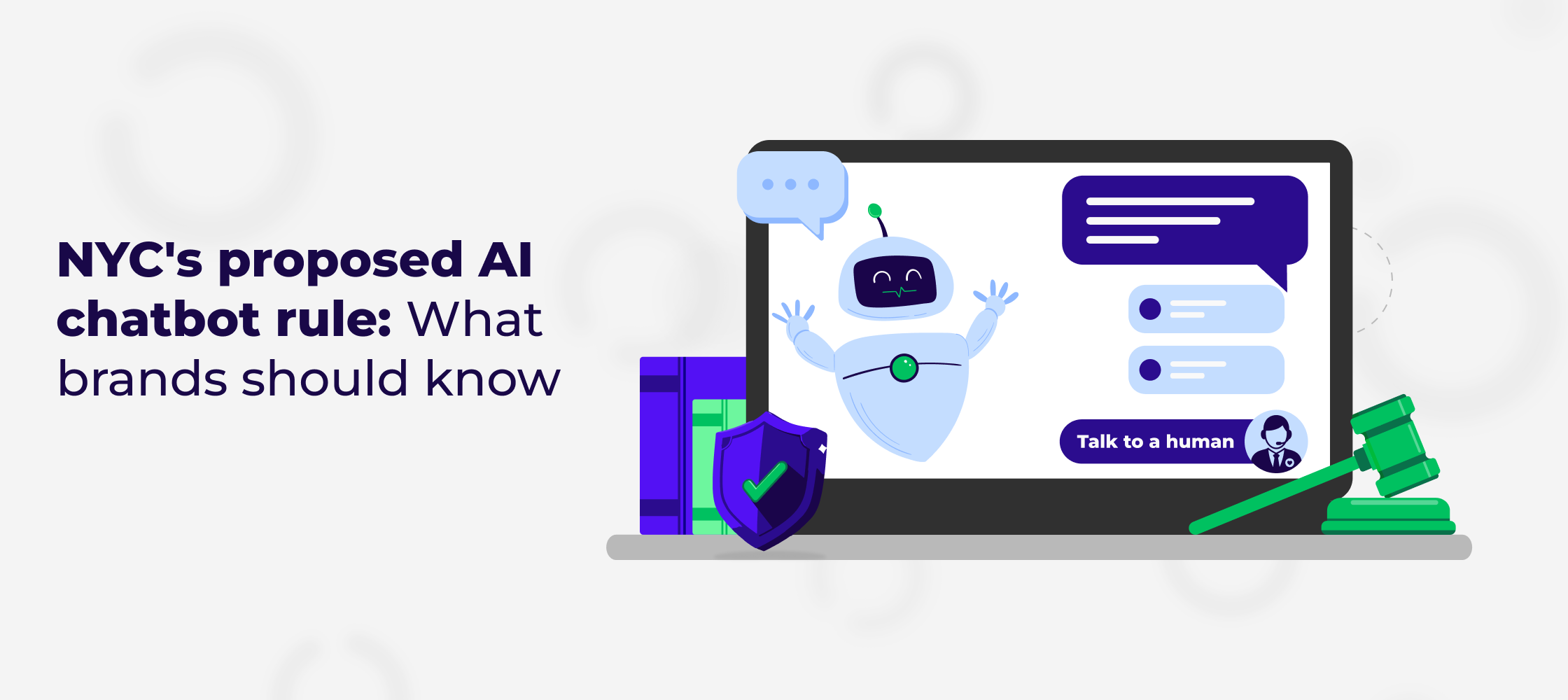
According to Gartner research cited by New York City, chatbots resolve as few as 17% of billing disputes and 58% of returns or cancellations. As brands increasingly rely on AI chatbot customer service, those figures highlight the risks of leaving customers in automated conversations without a clear path to resolution.
On October 20, 2026, New York City announced a proposed rule addressing automated customer service systems, including AI chatbots. While the proposal is not yet law, it raises important questions about how brands use AI to manage customer conversations across Instagram DMs, Facebook Messenger, WhatsApp, and public comments.
What is NYC's proposed AI customer service rule?
The New York City Department of Consumer and Worker Protection (DCWP) proposed new restrictions on AI chatbots and other automated customer service systems to address situations where customers struggle to get meaningful assistance.
The proposal focuses on four central principles:
Transparency: Businesses would need to disclose when customers interact with automated systems.
Human access: Customers would need an accessible path to a human representative.
Accountability: Businesses could not avoid responsibility for unlawful conduct by blaming AI.
Meaningful service: Companies advertising customer support would need to provide meaningful assistance.
The proposal would affect businesses operating in New York City, with civil penalties starting at $525 and potential restitution for harmed consumers. The public comment period remains open through November 19, 2026, when a public hearing is also scheduled. The requirements have not been finalized or enacted.
What the proposed rule could mean for social media customer care
Social media teams already use automated replies, chatbots, and routing systems to manage customer inquiries. Although NYC's proposal does not explicitly identify specific social media features as covered services, it gives brands an opportunity to evaluate how they use AI for customer service.
Three areas deserve particular attention:
DMs and private messaging: Automated replies can acknowledge inquiries and provide basic information, but customers should understand when they're interacting with AI and how to reach human support.
Public comments: Automation may help address routine questions, but sensitive complaints, repeated service failures, and potential reputation risks often require personalized attention.
Automated workflows: FAQ bots and routing systems should preserve customer context as inquiries move between automated support and human teams, reducing the need to repeat information.
A chatbot might acknowledge a complaint within seconds, but customers can still become frustrated if they must repeat information or navigate multiple automated responses before getting help. Measuring resolution alongside response speed can give teams a clearer picture of the customer experience.

NYC's proposed rule highlights a customer service problem rather than a problem with AI itself. AI has an important role in managing high volumes of customer inquiries, from initial triage and message routing to response drafting and early issue detection.
An effective human handoff in customer service requires clear criteria for when an issue should move from automation to a person. Billing disputes, emotionally sensitive complaints, and repeated service failures can quickly erode customer trust. These moments call for human analysts who can understand the full context, address the concern, and help protect the customer relationship.
ICUC's Community Management Report analyzed approximately 2.7 million brand interactions during the first five months of 2026. Of the interactions ICUC handled, 46% were entirely manual, while the remaining 54% involved some form of automation.
The research also found that direct messages received an average response time of 2 hours and 43 minutes, compared with 3 hours and 45 minutes for comments.
These findings highlight why brands need to distinguish between automation that supports customer care teams and automation that manages conversations independently. Understanding where human involvement is needed helps brands make more intentional decisions about their customer care workflows.
How to prepare your social customer care strategy for greater accountability
Brands don't need to wait for NYC's final rule to identify potential gaps in their social media customer service workflows, particularly those involving automation. Start by asking four questions:
Is AI clearly identified? Can customers recognize when they're interacting with an automated system rather than a human?
Is human support accessible? How many steps does it take to reach someone who can address an unresolved concern?
Are handoff triggers defined? Do complex inquiries, repeated complaints, and sensitive issues move through established escalation workflows?
Are you measuring resolution or deflection? Does reporting track whether customer issues were resolved, or primarily how many interactions AI handled without involving a person?
Test these workflows from the customer's perspective. Follow a common complaint through the automated process to identify unnecessary steps, confusion, or delays. Review the experience across Instagram, Facebook, WhatsApp, and other customer care channels.
Platform capabilities and audience expectations can vary, even when service standards remain consistent.
Build AI-enabled, human-first customer care with ICUC
Managing customer conversations across channels, markets, and time zones can stretch even well-resourced teams. As AI becomes more embedded in customer care, knowing when to involve a person is becoming just as important as deciding what to automate.
ICUC helps enterprise brands navigate these decisions with 24/7 digital customer care, multilingual human support, social intelligence, and structured escalation workflows. We help brands identify where automation adds value and where human expertise is essential to resolving issues and protecting customer relationships.
Sign up for the Social Operations Workshop

FAQ: New York City's proposed automated customer service rule
Does NYC's proposed AI customer service rule apply to social media chatbots?
The proposal addresses automated customer service systems used by businesses operating in New York City, but it does not explicitly identify individual social media features. Brands using automated DMs, messaging workflows, or chatbots should review the final requirements to determine which activities fall within their scope.
Are businesses still allowed to use AI for customer service under the proposed rule?
Yes. The proposal focuses on transparency, human access, and accountability rather than banning AI customer service. Brands can continue using generative AI for customer service tasks such as response drafting, with human oversight and escalation for more complex issues.
How should brands measure AI customer service performance?
Brands should look beyond response speed and chatbot deflection to understand whether customer issues are resolved. Useful metrics include first-contact resolution, successful human handoffs, repeat contacts, escalation rates, and customer satisfaction.
About the Author

Nicole van Zanten
As Chief Growth Officer at ICUC, Nicole leads global growth across marketing, client success, and business development. With over 15 years of leadership in social media, content strategy, and digital transformation, she brings a unique mix of creative vision and operational rigor to building high-performance teams and sustainable revenue growth.