

Voice of the Customer: What It Is and Why It Matters
Most brands invest heavily in personas and strategy documents, yet still lack real-time visibility into how their customers really feel.
You know your customers well and feel comfortable carefully putting together documents and persona sheets that articulate their wants, needs, and wishes. But, how well do you know your customer in their own words? Or one may even say, in their own voice?
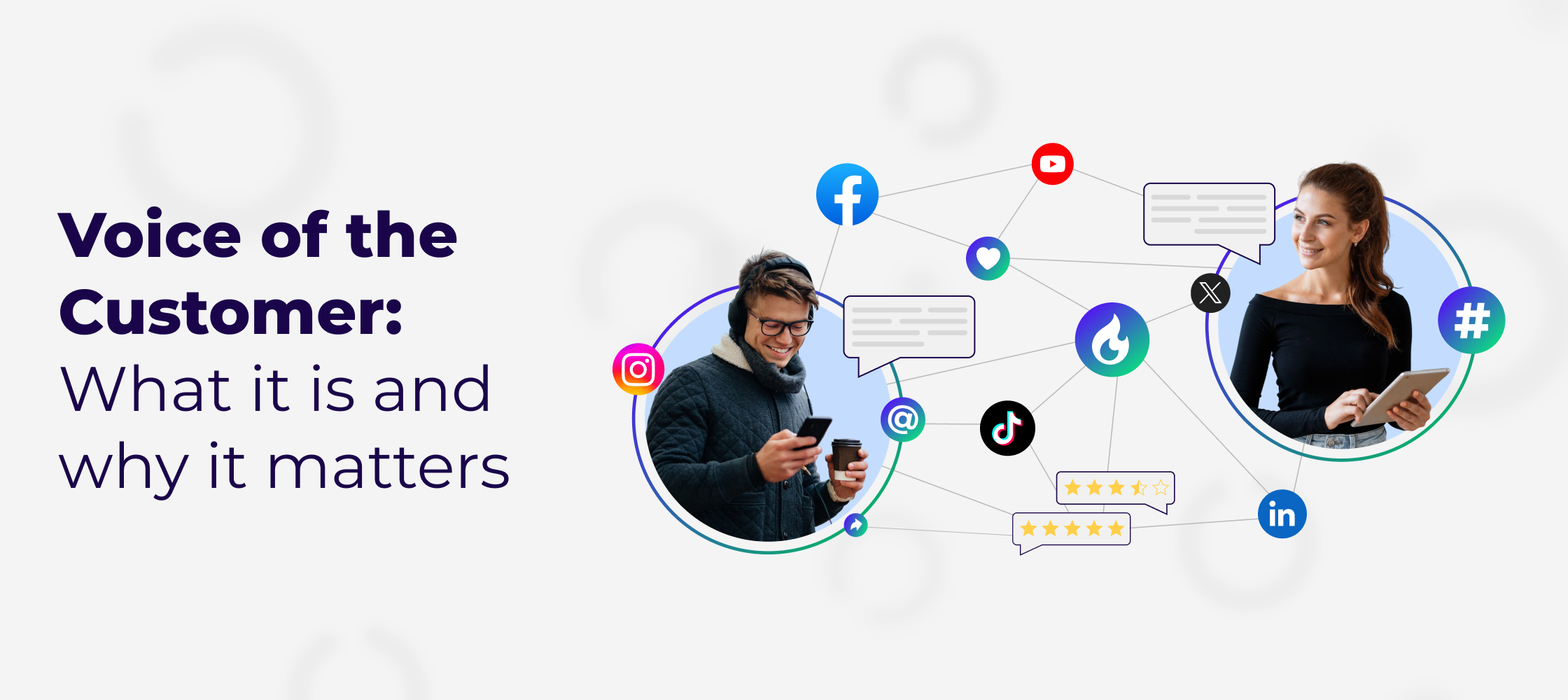
Voice of the Customer, or VoC, is the term for the real-time signal generated by comments, messages, reviews, and mentions on social media. It captures sentiment shifts as they happen.
Tapping into the Voice of the Customer is essential for brands looking to move from reactive moderation to proactive decision-making.
In this article, we will take a look at what Voice of the Customer means for brands, how to track it, and how it can complement other tracked metrics to paint a complete picture of performance.
What is the Voice of the Customer?
Voice of the Customer is a qualitative output of what customers are saying about a brand, product, or service in real time. VoC is helpful because it combines engagement data with business impact to reveal how followers or fans of a particular brand feel over time.
Examples of Voice of the Customer data could include:
Comments.
Replies
Direct messages
Reviews
Mentions
Complaints
Customer support questions
Feature requests
Patterns learned from social listening
In short, if it comes directly from your customer and helps you understand something about how they're feeling or what they're thinking, it falls under the VoC umbrella.
Why the Voice of the Customer matters for brands today
Used correctly, Voice of the Customer data can be incredibly valuable for your business. Not only does it offer a rare opportunity to benefit from a feedback loop, but it also allows brands to build credibility with their audience.
Every time a piece of feedback is acknowledged, a customer may feel more heard. This engagement not only makes the customer happy but can also improve brand reputation.
Insights from the Voice of Customer help point a brand's strategy in the right direction, so social media efforts — and marketing overall — are more likely to pay off.
Positive VoC feedback tells companies they're on the right track. Negative VoC feedback may denote trouble ahead.
Does VoC data sound like something that your team could benefit from? Here are some of the main ways to capture it within your organization.
The primary sources of Voice of the Customer data
Though the sources of Voice of the Customer data vary by organization, most will find success looking in the following areas.
Direct feedback
Direct feedback is a more explicit way to collect VoC data, but it may not always signal the same level of urgency as unsolicited feedback. Here are some examples of direct feedback:
Surveys
Interviews
Customer support tickets
Post-interaction feedback forms
In-app submissions
Account reviews
Escalation logs
Notes collected during onboarding
Indirect feedback
Indirect feedback is the tidbits you discern from customer interactions that didn't necessarily start as a request for feedback. These can include:
Online reviews
Social media
Community conversations
Brand mentions
Sentiment trends
Search behaviour
Frequently asked questions
Behavioral signals
Behavioral signals can be more subtle to seek out, but they can hold just as much information as indirect and direct feedback. Some examples include:
Patterns in engagement
Sentiment shifts, up or down
Recurring issues
Activity within an app or on a website
Reactions to product or feature releases
How reviews shape the Voice of the Customer
Customer reviews are often the most visible VoC signal. But they also present an opportunity for brands looking to improve their reputation. If a brand receives a negative review, it can build trust by responding with grace and professionalism.
Responding to reviews is such an impactful action that responses should be viewed as part of the total VoC approach, and not just as reputation management.
How brands unify Voice of the Customer across channels
Voice of the customer insights are most useful to brands when viewed collectively. Otherwise, brands risk siloing feedback, limiting their ability to discern insights.
Taking a collective approach goes beyond aggregating reviews from multiple sites. Full Voice of the Customer analytics needs to consider social comments and community data alongside reviews.
Operationalizing VoC data at scale and across locations gives companies a complete picture of customer sentiment and enables them to act on insights more effectively.
Turning Voice of the Customer Insights into Action
Once you've become proficient at collecting Voice of the Customer data, it's time to think about how you are going to use this customer insight to create customer advocacy.
First, you'll want to parse your data to identify trends and themes. You should share these insights among your teams and stakeholders. Some teammates might have different observations or reflections about the information you're seeing.
If VoC insights surface an issue that requires immediate attention, don't wait. For example, repeated feedback about a confusing product feature is a clear signal to step in.
Voice of the customer tools and technology
Collecting VoC information on your own can be time-consuming. Some brands opt to invest in a platform or tool to help them stay up to date with their customers' voices.
These tools empower customer feedback management by consolidating feedback from multiple channels into a single view. They will be able to surface trends, see sentiments shift in real time, and even pick up new recurring issues.
Having VoC data in one place can be helpful, but a human eye is still needed to pick up on context, nuance, and intent. Most brands will still invest in a team that can provide empathetic responses that keep compliance requirements and cultural sensitivity in mind.
How ICUC supports Voice of the Customer analytics
ICUC understands that Voice of the Customer analytics only deliver value when insights are useful and timely. ICUC helps enterprise brands operationalize VoC data by turning public conversations into real-time intelligence.
Through ICUC's social listening services, we help brands stay up to date with customer signals as they happen. We can track sentiment (both shifting and static), emerging risks, and recurring themes. We can also connect these insights to online reviews and broader reputation signals to build a complete picture of how customers feel.
Book a meeting to learn more about how ICUC's services could work for you and your customers.
FAQ: Voice of the Customer
What is a Voice of the Customer program?
Voice of the customer programs capture customer sentiment and challenges throughout the entire customer journey. They bring together indirect and direct signals, as well as behavioral signals, to paint a full picture of how a specific company stands with its customers.
How do brands collect Voice of the Customer data?
Brands collect Voice of the Customer data through both direct and indirect channels. Direct channels could include overt sources like interviews, surveys, or interactions. Indirect sources could be social media conversations, reviews, or mentions.
How do reviews impact Voice of the Customer?
Reviews are a pivotal part of the Voice of the Customer. They reflect customers at their most unsolicited moments. Reviews often reveal patterns that illuminate a brand, product, or service's strengths and weaknesses.
How does Voice of the Customer affect revenue?
Voice of the customer insights can have a very real impact on revenue through customer retention. They can also help shape business decisions. Brands that act on customer feedback can reduce online customer service costs and are more likely to succeed with their marketing campaigns.
About the Author

Nicole van Zanten
As Chief Growth Officer at ICUC, Nicole leads global growth across marketing, client success, and business development. With over 15 years of leadership in social media, content strategy, and digital transformation, she brings a unique mix of creative vision and operational rigor to building high-performance teams and sustainable revenue growth.